

Vietnamese Studies Students Join International Peers on Cultural Immersion Tour to Tri Le Conical Hat & Quang Phu Cau Incense Villages
Th7 08, 2026
On July 6, 2026, the Faculty of Vietnamese and Southeast Asian Linguistics and Cultures – University of Languages and International Studies (ULIS, VNU) organized an experiential cultural tour to Tri Le Conical Hat Village and Quang Phu Cau Incense Village. The event drew enthusiastic participation from students majoring in Vietnamese Language and Culture, a delegation from National Chengchi University (Taiwan), and international students currently studying at the Faculty.
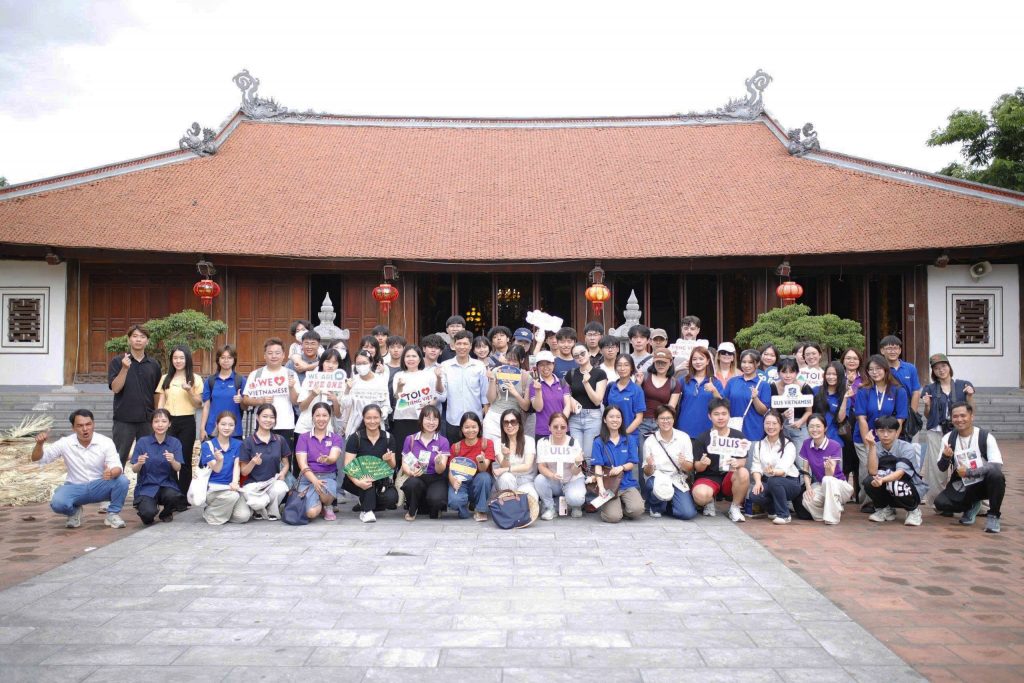
Departure took place at 7:00 AM from the university campus. En route to the destinations, students received an insightful overview of the cultural characteristics of the Red River Delta, the history of traditional craft villages, and the distinct heritage of Hanoi.
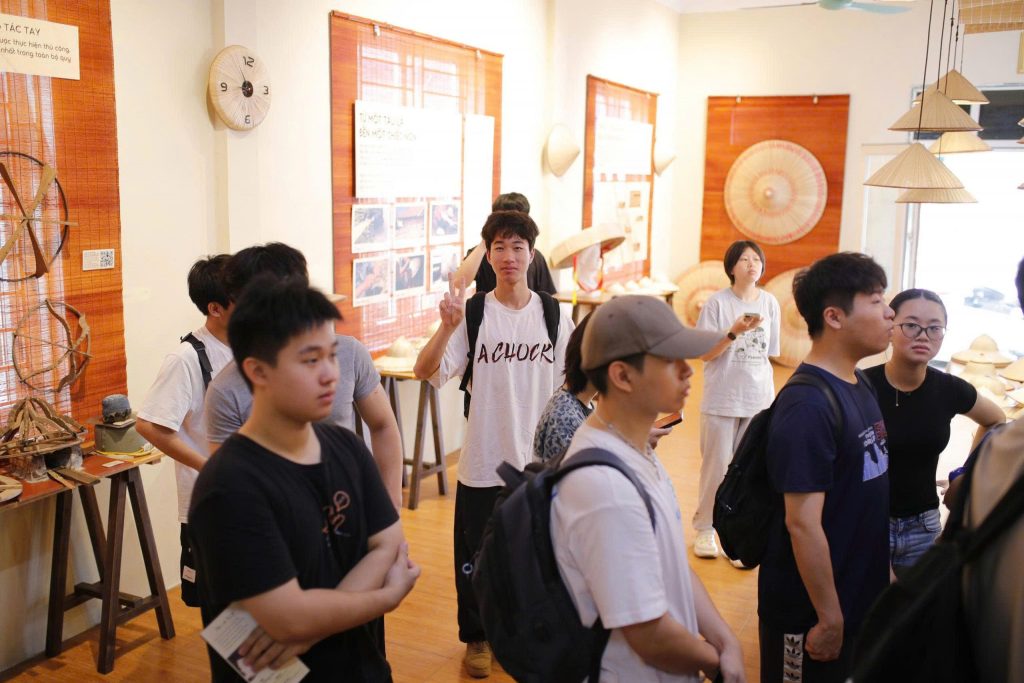
The first stop was Tri Le Conical Hat Village. Here, the group visited several landmarks deeply tied to the community’s cultural and spiritual life, including the Cultural House, Dong Coc Pagoda, the village communal house, the dyke embankment road, and the Ancestral House of the Vu Ba family. Through local guidance, participants explored the village’s history and the symbolism behind traditional Vietnamese motifs, such as the “crane standing on a turtle’s back” and the Four Sacred Mythical Creatures (Dragon, Qilin, Turtle, and Phoenix). At the village cultural house, students were introduced to the intricate process of making a conical hat (nón lá) and viewed various practical adaptations of the craft in daily life.
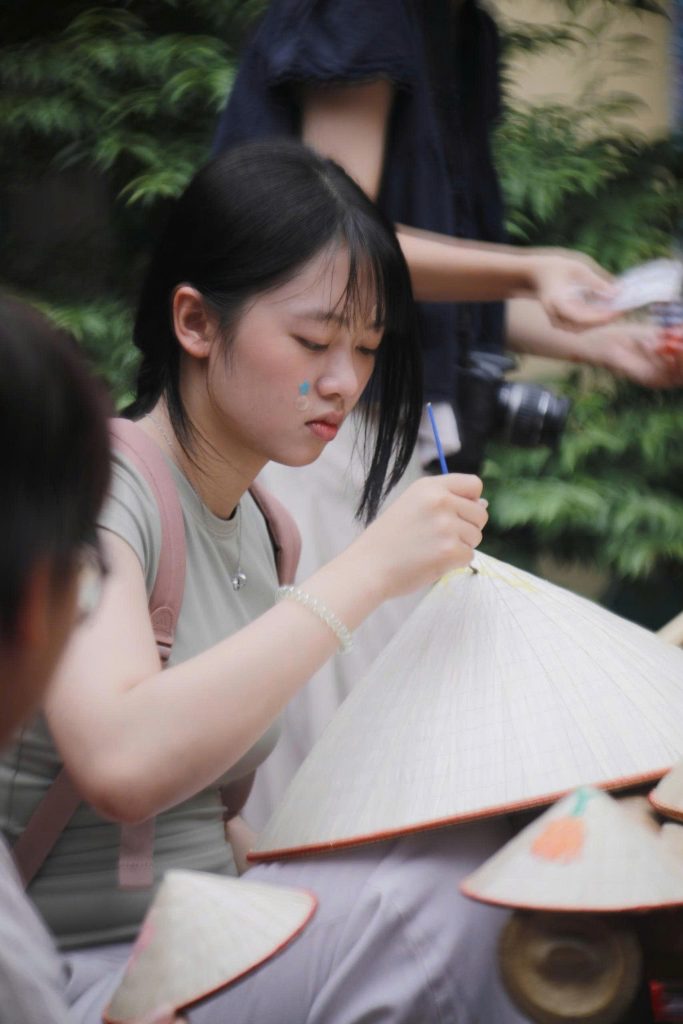
A major highlight of the trip was hands-on conical hat making at a local household. Guided by artisans, both local and international students practiced foundational crafting steps, decorated their own hats with custom hand-painted designs, and kept their creations as memorable souvenirs. The experience offered students a deeper appreciation for traditional handicraft techniques and the enduring cultural value of the nón lá across generations.
At lunchtime, the group shared an authentic home-cooked meal featuring traditional dishes such as fried spring rolls (nem rán), betel leaf beef rolls (chả lá lốt), lemongrass chili chicken, fresh herbs salad, and steamed rice. The warm, hospitable atmosphere and local flavors provided international students with a genuine glimpse into everyday rural Vietnamese life.
In the afternoon, the delegation continued to Quang Phu Cau Incense Village—one of Hanoi’s most iconic craft hubs. Students observed the full production line, from raw material selection and bamboo stick dyeing to sun-drying and final packaging. Beyond observing, the students actively engaged with local artisans to discuss how traditional crafts are preserved and developed in today’s modern context.
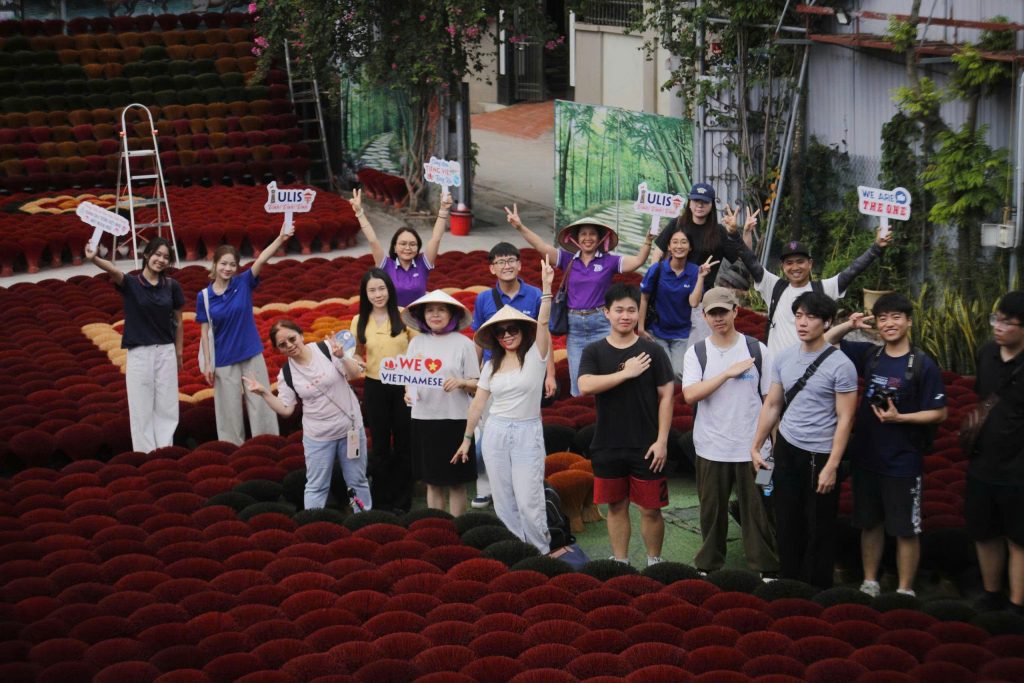
Throughout the journey, faculty members and Vietnamese Studies students proactively served as guides, cultural interpreters, and companions to the visiting students from National Chengchi University and international peers. These dynamic interactions fostered an engaging educational environment, helping international students experience Vietnamese culture firsthand.
The field trip concluded at 4:30 PM on the same day. Beyond expanding students’ knowledge of Vietnamese history and culture, the activity highlighted the vital role of the Faculty of Vietnamese and Southeast Asian Linguistics and Cultures in promoting cross-cultural understanding, strengthening international partnerships, and sharing Vietnamese heritage with the world.
Faculty of Vietnamese and Southeast Asian Linguistics and Cultures
| This meaningful cultural immersion tour was supported by the Faculty of French Language and Culture (ULIS) through the TRILAF Project (Developing Handicrafts and Francophone Solidarity for a Sustainable Future). The program provided Vietnamese and international students with direct engagement with traditional cultural heritage, while reinforcing international solidarity within the Francophone community toward craft preservation and a sustainable green future. |