

Training Series on Teaching Vietnamese as a Foreign Language: Hands-on Experience for Students of Vietnamese Language and Culture
June 24, 2026
On May 30, June 13, and June 14, the Faculty of Vietnamese Language and Culture and Southeast Asian Studies at the University of Languages and International Studies (ULIS – VNU) organized a 6-session training series on teaching Vietnamese as a foreign language. This initiative provides students with practical, hands-on experience, enabling them to work as teaching assistants in Vietnamese language classes for foreigners right during their university years.
This practical academic initiative equips learners with foundational knowledge, essential pedagogical skills, and a proactive mindset before entering a real classroom environment. Across the six sessions, the program covered core aspects of Vietnamese language instruction, including: Phonetics, Vocabulary, Grammar, Culture, Teaching Assistant Skills, and Practical Guidance. The highlight of the series was the seamless blend of professional insights and practical application. Under the dedicated guidance of experienced lecturers, students gained both academic knowledge and a clear, firsthand view of common classroom scenarios, lesson organization, and student support methods.
Opening the series with the Phonetics module, Ms. Nguyen Thi Thu Huong (M.A.) shared practical insights into guiding foreigners with Vietnamese pronunciation. The session focused on identifying and correcting classic errors related to tones, initial consonants, final consonants, and sentence intonation. This foundational knowledge helped students realize that teaching pronunciation in the early stages requires immense patience from both instructors and learners. Additionally, teachers must flexibly apply visual methods tailored to diverse students from different countries.
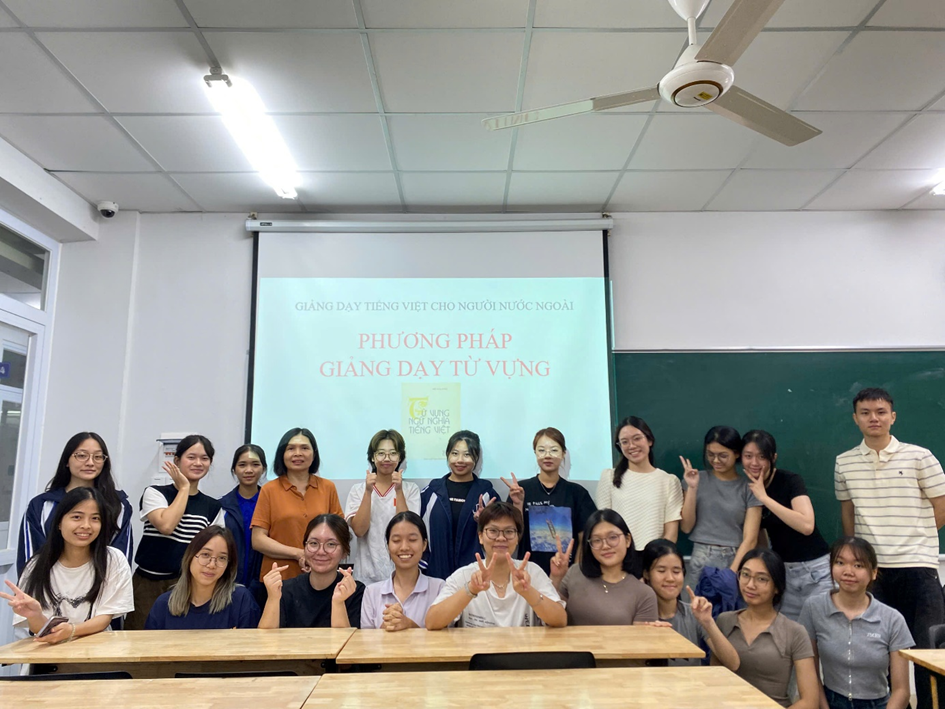
Dr. Chu Thi Bich guiding students on visualization methods and integrating interactive games into vocabulary teaching.
The subsequent sessions covered Vocabulary, Grammar, and Culture, further expanding students’ perspectives on teaching Vietnamese as a foreign language. Led by Dr. Chu Thi Bich, students explored contextual, real-world vocabulary instruction through communication scenarios and interactive language games. Meanwhile, Dr. Ngo Thanh Mai emphasized the crucial role of cultural elements in the classroom. Integrating culture helps foreign learners grasp both the language and the daily life and cultural traits of the Vietnamese people. For the Grammar module, Dr. Chu Thi Phong Lan introduced simplified, engaging methods to present sentence structures that learners can apply immediately to daily conversations.
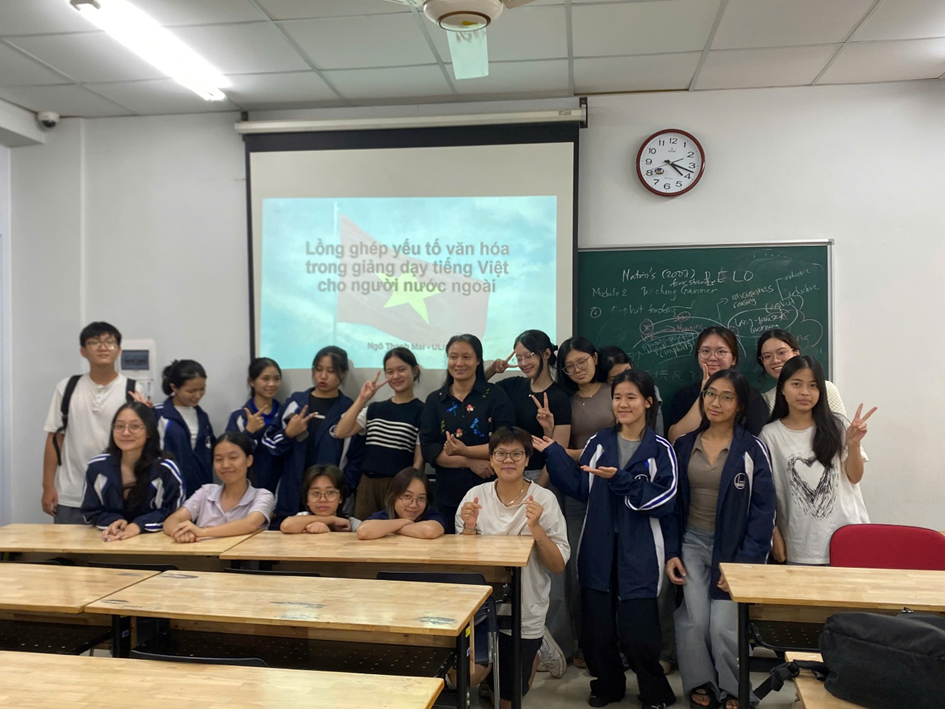
Students enthusiastically discussing how to bring Vietnamese culture into the classroom with Dr. Ngo Thanh Mai.
In the Teaching Assistant Skills module, Dr. Vu Thi Hong Tiep’s presentation on working in project-based classes highlighted the vital role of teaching assistants (TAs) as bridges. A TA does not simply support teaching activities but serves as a key link between the lecturer and learners. TAs help foster a positive learning atmosphere, accompany learners during practice hours, and ensure the class runs smoothly and effectively.
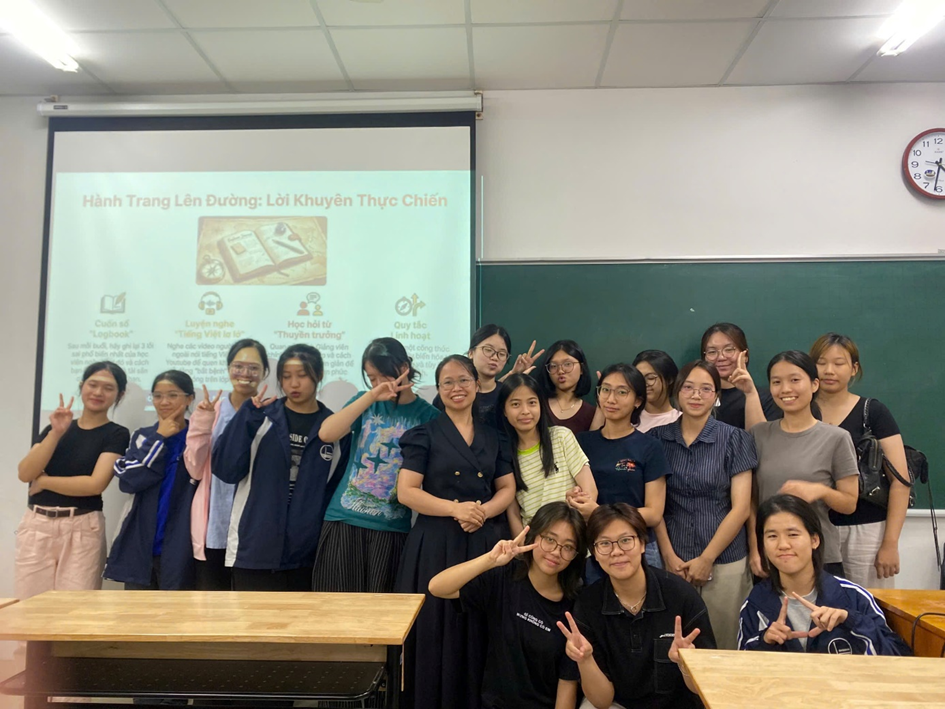
Dr. Vu Thi Hong Tiep sharing real-world experiences from project-based classes.
The training series concluded with a practical guidance and mock interview session coordinated by Dr. Tran Huu Tri (Dean of the Faculty of Vietnamese Language and Culture and Southeast Asian Studies), Dr. Chu Thi Bich, Dr. Vu Thi Hong Tiep, and Ms. Nguyen Mai Phương (M.A.). This crucial practical stepping stone helped students review their knowledge, build confidence, and prepare a solid mindset for the professional workplace.
Following the training, outstanding students will have the opportunity to join the Faculty’s Vietnamese training projects for foreigners. Available roles include teaching assistants, classroom support volunteers, and cultural event organizers, allowing them to step into teaching under the professional guidance of faculty members. This serves as a “real-world lecture hall” where students become familiar with lesson planning, classroom management, problem-solving, and professional communication with international students. All participants who attended all 6 sessions received a Certificate of Completion to enhance their internship portfolios before graduation.
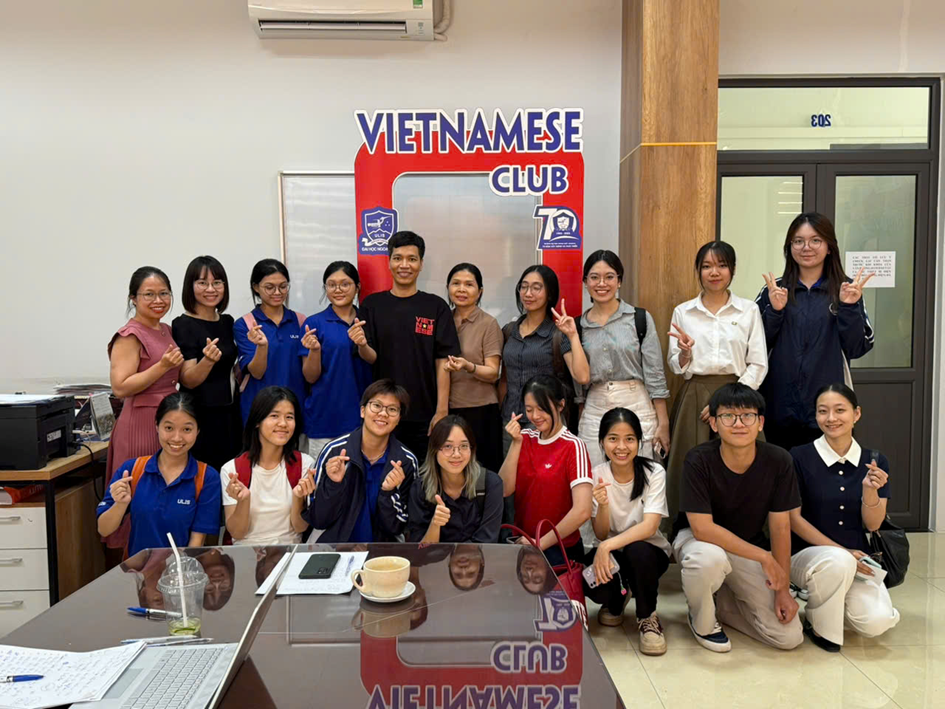
Practical teaching sessions and interviews for students applying to be teaching assistants in Vietnamese classes for foreigners.
Packed with practical insights, this 6-session training series has laid the very first foundation for the Faculty’s inaugural cohort on their journey to spread the love for the Vietnamese language and cultural identity to the world. This activity reaffirms the deep commitment of the Faculty Management Board and the University to nurturing and developing a highly competent, eager-to-learn, and passionate next generation of Vietnamese language educators.
Faculty of Vietnamese Language and Culture and Southeast Asian Studies